Understanding the Relationship Between a Private Key and a Seed Phrase
In the world of cryptocurrency, security hinges on two fundamental concepts: the private key and the seed phrase. While both serve to protect your digital assets, they operate in distinct ways. Knowing how they interact—and why you should never confuse one for the other—can save you from costly mistakes.
What Is a Private Key?
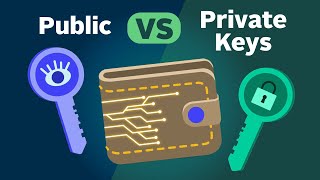
A private key is a 256‑bit number that grants complete control over a blockchain address. Possessing the private key means you can sign transactions, move funds, and prove ownership of the associated wallet. Because of its power, the private key must be kept secret; anyone who obtains it can drain the wallet entirely.
What Is a Seed Phrase?
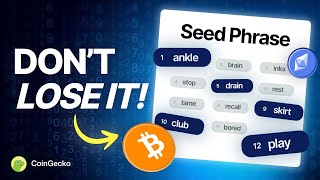
A seed phrase, also known as a recovery phrase or mnemonic, is a human‑readable representation of a cryptographic seed. Most wallets generate a 12‑, 18‑, or 24‑word phrase based on the BIP‑39 standard. This phrase can recreate every private key derived from the original seed, allowing you to recover an entire wallet hierarchy with a single piece of information.
How Private Keys Are Derived From a Seed Phrase
The process follows a deterministic algorithm defined by BIP‑32 (Hierarchical Deterministic Wallets) and BIP‑39. In simple terms:
- The 12‑ or 24‑word seed phrase is converted into a binary seed using a standardized word list.
- The binary seed feeds a key‑derivation function (KDF) that produces a master private key and a master chain code.
- From the master private key, a series of child private keys are generated for each address you create.
Because the seed phrase is the root of this hierarchy, losing it means losing access to every derived private key. Conversely, if you keep a single private key but lose the seed phrase, you can still access the specific address tied to that key, but you cannot regenerate the rest of the wallet.
Can You Convert a Private Key Back to a Seed Phrase?
The short answer is no. The relationship is one‑way: a seed phrase can generate private keys, but a private key does not contain enough information to reconstruct the original seed phrase. This is by design, ensuring that even if a private key is exposed, the broader wallet structure remains protected.
Attempting to reverse‑engineer a seed phrase from a private key would require solving an infeasible cryptographic problem, akin to breaking the underlying elliptic‑curve encryption.
Practical Implications for Users
- Backup Strategy: Store your seed phrase securely (e.g., in a hardware wallet like Bit


![Tangem Wallet: Seed Phrase vs. No Seed Phrase [What’s Better?]](https://i.ytimg.com/vi/m3u1breR5SE/mqdefault.jpg)